What it looks like
Indicativo and subjuntivo share the same color per tense –
indicativo additionally has a colored border, so you can tell the two moods apart at a glance.
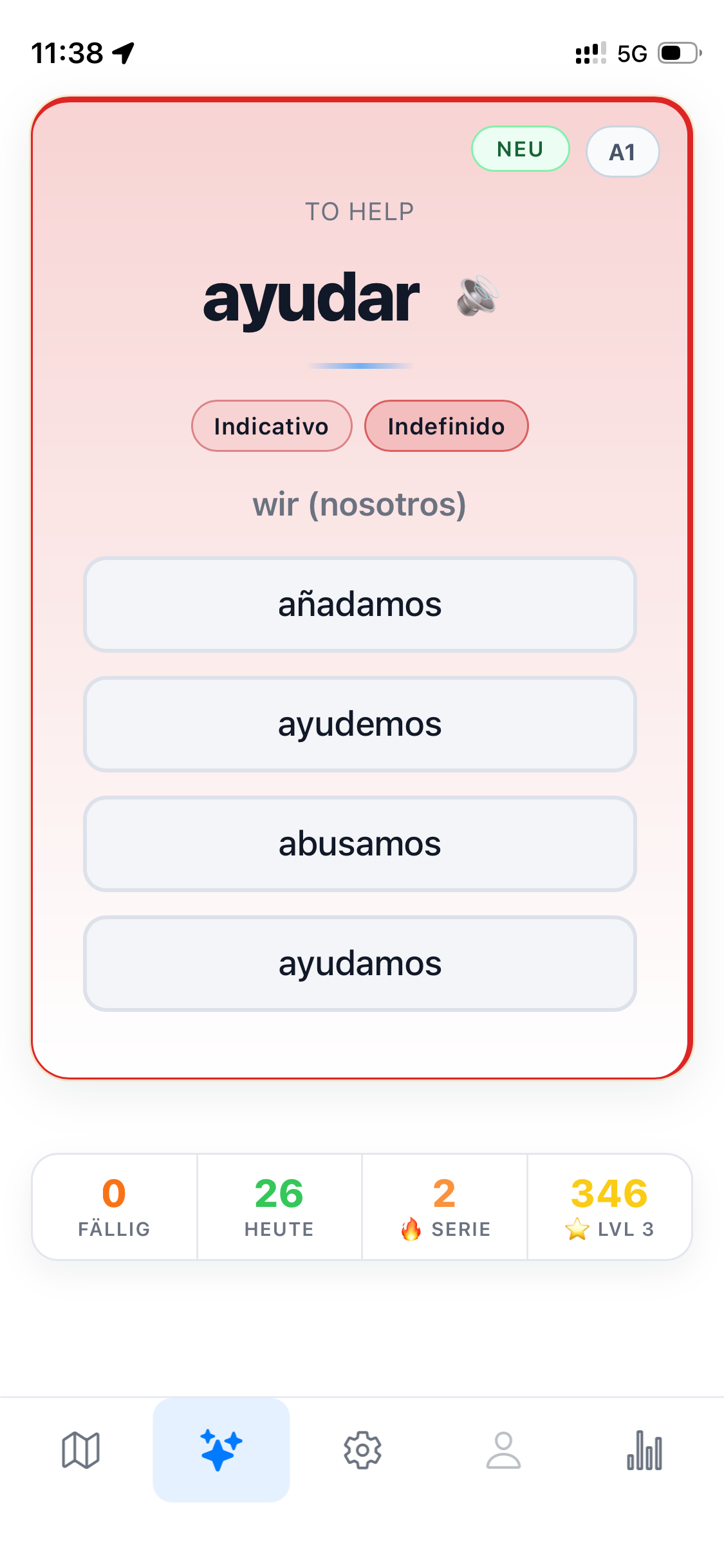
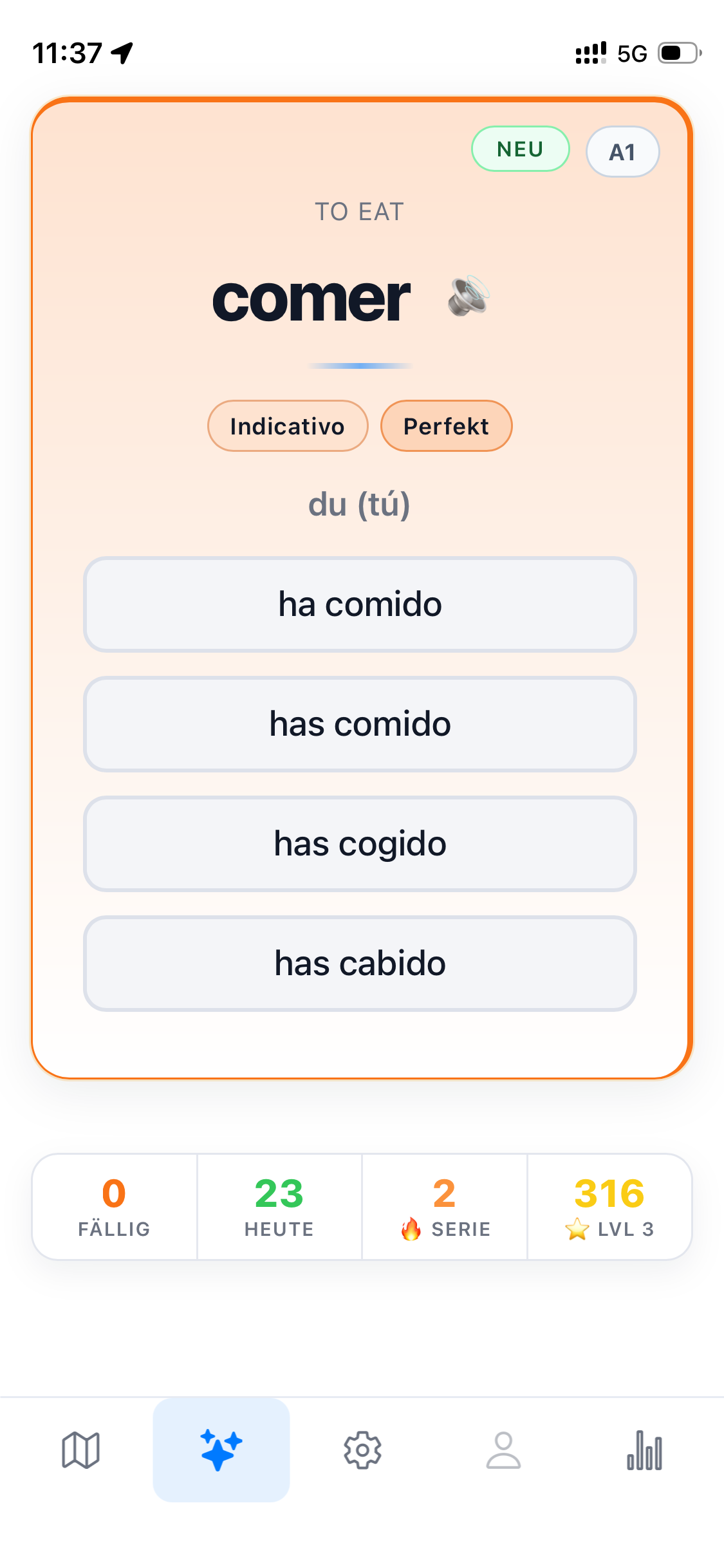
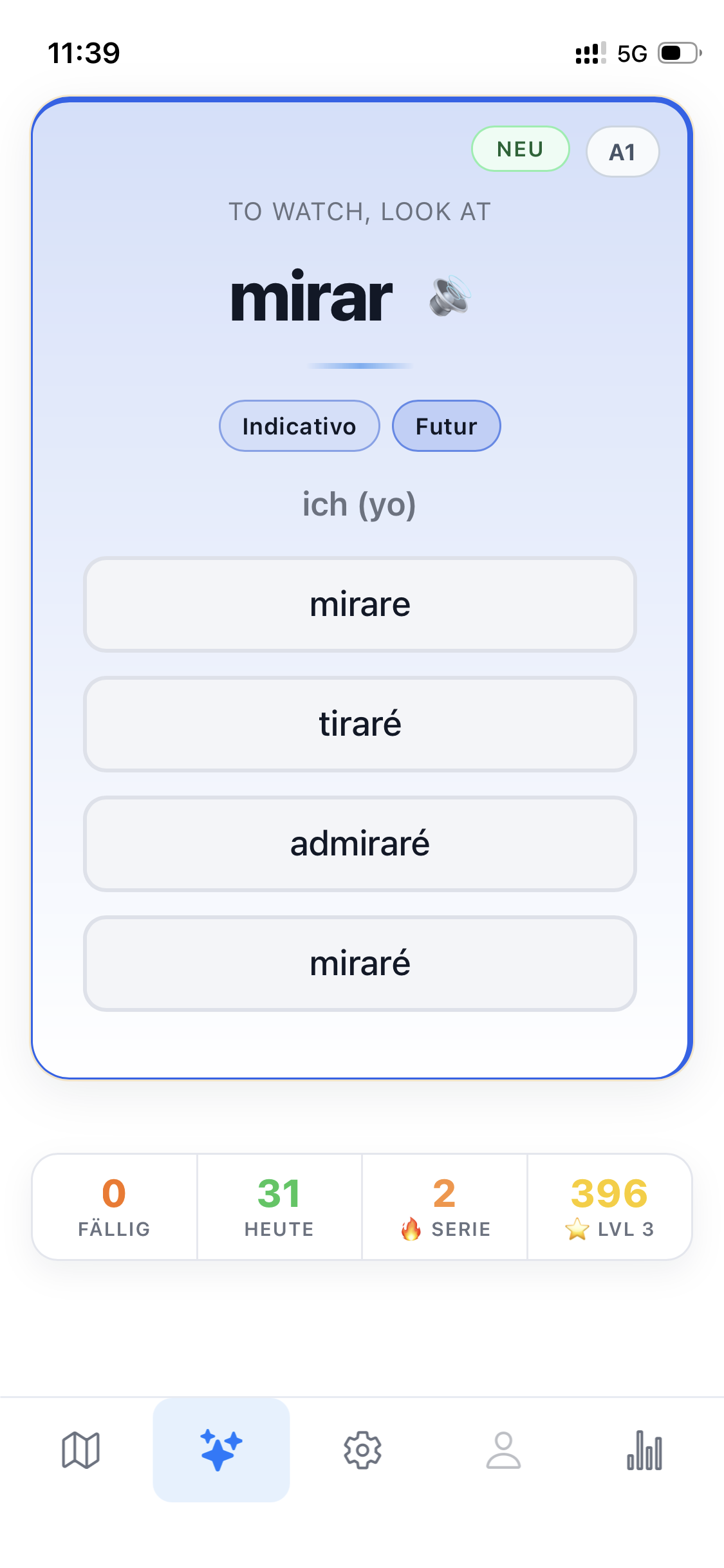
A chameleon changes its colors – and now the flashcard does too. Every tense has its own shade: one glance and you know what you are dealing with.
While practising you have to place a card instantly: is this past, present or future? Without colors you first read the mood badge and the tense badge as text – that costs valuable milliseconds and breaks the flow. With tense colors a glance at the card is enough: the color tells you straight away which tense you are conjugating in.
Like a real chameleon, the card adapts to its surroundings – except that here the color is not camouflage but a signal. Green stands for the present, warm shades – red through orange to amber – for the past, and cool shades – blue and purple – for future and conditional. The pluscuamperfecto, the “double past”, gets a strong pink – far enough from the other reds to be recognisable as its own category at once.
Same tense, same color – but not without a difference: indicativo cards additionally carry a colored border. That way you see at a glance whether you are in the indicative or the subjunctive, without reading the badges.
Indicativo and subjuntivo share the same color per tense –
indicativo additionally has a colored border, so you can tell the two moods apart at a glance.